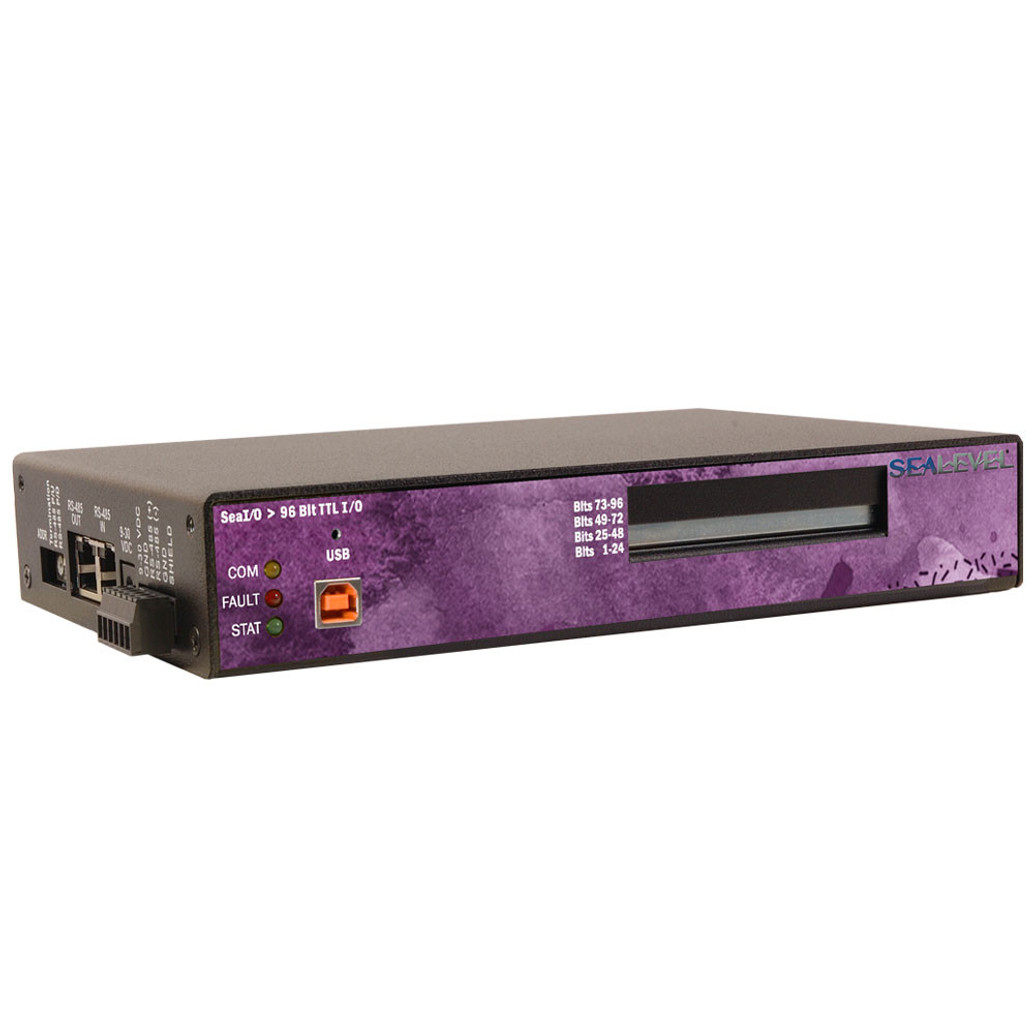
The SeaI/O-463U provides 96 channels of buffered drive digital I/O, with 12 eight-bit ports, offering flexible input/output configurations for seamless PC-based control and automation of equipment via USB..
Product added to cart successfully
Detail
Special Features
Specification
The SeaI/O-463U offers 96 buffered digital I/O channels, organized into 12 eight-bit ports that can be easily configured as either inputs or outputs. The module facilitates quick connections using standard 50-pin IDC ribbon cables, with a metal strain relief bracket included to ensure reliable connections. It can be used for PC-based control and automation, such as in sensors, switches, security control systems, and more.
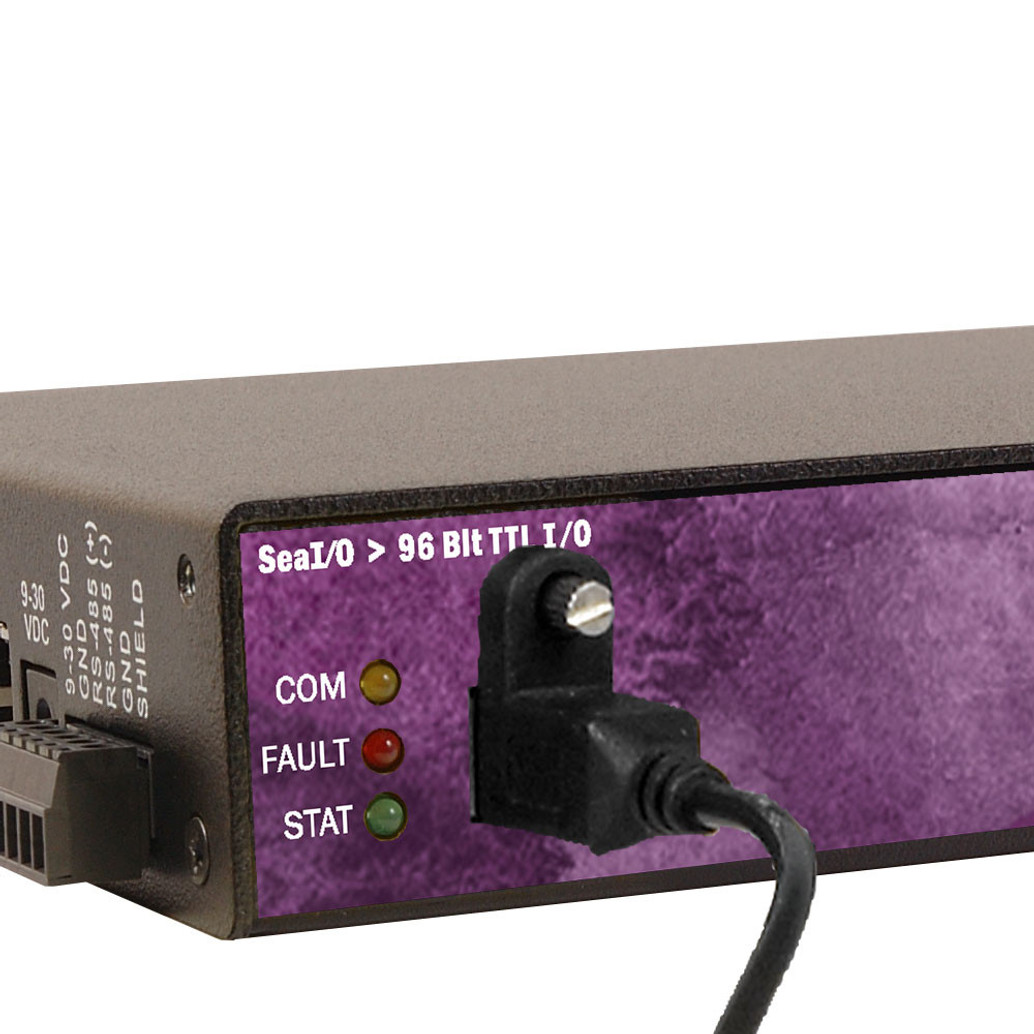
With Sealevel's SeaLATCH USB port, you can ensure a secure connection with the USB cable (included with the metal thumbscrew). Powered by a 9-30VDC source, it supports the Modbus RTU protocol, which allows for easy integration into existing systems. Expandability is straightforward, with the capability to add up to 246 additional SeaI/O N-series modules.
This kit includes the Digital I/O Handbook to help accelerate development, ensuring you can utilize the SeaI/O-463U to its fullest.
96 Channels of Buffered Drive Digital I/O – 12 eight-bit ports, configurable as input or output
Connection via 50-pin IDC Ribbon Cables – Connect up to four industry-standard relay racks
SeaLATCH USB Port – Secure USB connection with metal thumbscrews for accidental disconnection prevention
Supports Modbus RTU Protocol – Easily integrates into existing control systems
Sealevel SeaMAX API – Seamless operation with Windows and Linux systems
Removable Screw Terminals – Simplified field wiring for quick installation
Includes Metal Strain Relief Bracket – Ensures stable connections and cable management
Power Supply Options – Powered by 9-30VDC, or choose from Sealevel power supply options
Expanding I/O Network – Up to 246 additional modules can be added via pass-through connectors
Digital I/O Handbook – Guide for digital I/O development with logic principles